When it comes to choosing the perfect pair of pants for comfort, breathability, and style, fabric matters more than most people think. In today’s world of conscious fashion and climate-aware dressing, the debate around linen vs bamboo fabric pants has become increasingly relevant—especially for those living in hot or humid environments.
At StrideLinen, we’ve seen a growing shift toward natural and plant-based fabrics. People want clothing that feels good, performs well, and aligns with sustainable values. But when comparing linen pants vs bamboo pants, which one truly stands out? This complete guide will break down everything you need to know—from breathability and comfort to durability, sustainability, and real-life use cases. Whether you’re shopping for summer travel, everyday wear, or building a minimalist wardrobe, this comparison will help you make the right decision.
What Are Linen Pants?
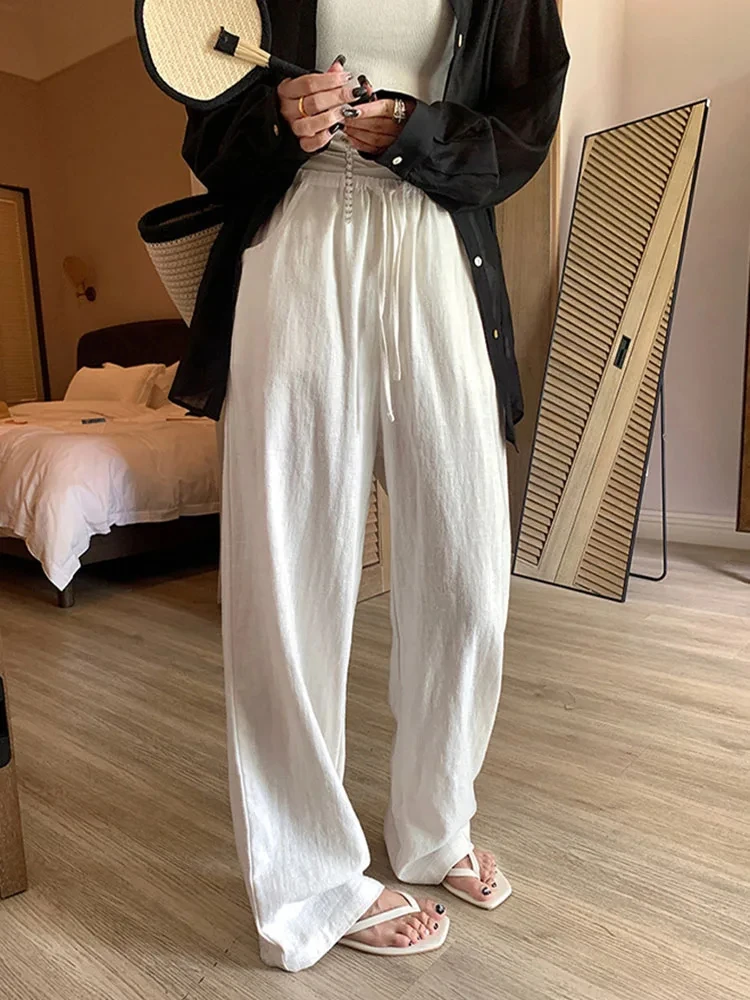
Linen pants are made from fibers derived from the flax plant, one of the oldest cultivated crops in human history. Known for its durability and natural texture, linen has long been associated with warm-weather clothing.
- Highly breathable fabric
- Lightweight and airy structure
- Natural moisture absorption
- Slightly rough but softens over time
- Distinct textured look
One of the biggest advantages of linen is its ability to allow air to circulate freely. If you’ve ever wondered, “Is linen breathable?”—the answer is a resounding yes. In fact, linen is often considered the most breathable fabric for summer pants.
Pros of Linen Pants:
- Excellent for hot weather
- Strong natural fiber (more durable than cotton)
- Eco-friendly and biodegradable
- Timeless, relaxed aesthetic
Cons of Linen Pants:
- Wrinkles easily
- Less soft compared to bamboo
- Limited stretch
Because of these characteristics, linen pants are often the go-to choice for vacation outfits, beachwear, and hot climate travel.
What Are Bamboo Fabric Pants?
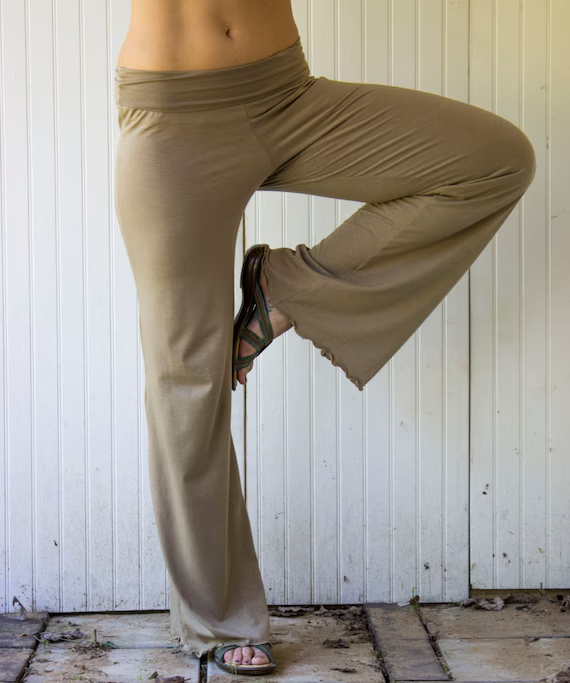
Bamboo fabric pants are typically made from bamboo viscose or bamboo rayon, which involves processing bamboo pulp into a soft textile. While bamboo is a natural plant, the fabric undergoes a semi-synthetic transformation.
- Ultra-soft and smooth texture
- Moisture-wicking capabilities
- Naturally antibacterial (in some cases)
- Flexible and slightly stretchy
- Gentle on sensitive skin
If you’re comparing bamboo viscose vs linen, the first thing you’ll notice is how soft bamboo feels. Many people describe it as similar to silk or high-quality cotton.
Pros of Bamboo Pants:
- Extremely comfortable for daily wear
- Great for sensitive skin
- Better wrinkle resistance than linen
- Suitable for travel and long wear
Cons of Bamboo Pants:
- Less breathable than linen in extreme heat
- Can wear out faster
- Chemical processing raises sustainability concerns
Bamboo pants are often chosen for comfort-focused outfits, casual wear, and long travel days.
Linen vs Bamboo Fabric Pants – Key Differences
| Feature | Linen Pants | Bamboo Pants |
|---|---|---|
| Breathability | Excellent airflow | Good but less airy |
| Softness | Medium (improves over time) | Very soft |
| Durability | High | Moderate |
| Wrinkles | Wrinkles easily | Wrinkle-resistant |
| Moisture-wicking | Good | Excellent |
| Sustainability | Very eco-friendly | Depends on processing |
| Price | Mid to premium | Mid-range |
This bamboo vs linen fabric comparison highlights the fundamental trade-offs: linen excels in airflow and durability, while bamboo dominates in softness and comfort.
Which Fabric Is More Breathable for Hot Weather?
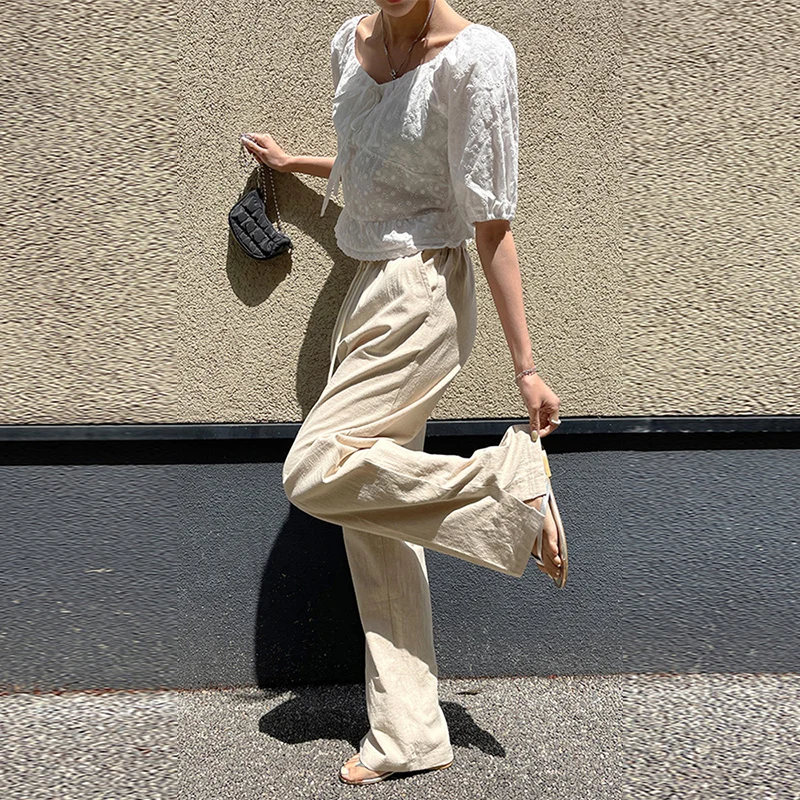
When evaluating linen vs bamboo for hot weather, breathability is not just a feature—it’s the deciding factor that directly impacts comfort, sweat management, and overall wearability.
Linen stands out because of its unique fiber structure. Flax fibers are naturally hollow, which allows air to circulate freely and heat to escape quickly. This creates a natural cooling effect that synthetic or semi-synthetic fabrics struggle to replicate. In real-world use, linen performs exceptionally well in:
- Hot, dry climates
- Direct sun exposure
- Outdoor activities and travel
- Beach and resort environments
Bamboo fabric, while often marketed as breathable, actually excels more in moisture management than airflow. It absorbs sweat efficiently and helps keep the skin dry, which makes it more suitable for:
- Humid climates where sweat control matters
- Light movement or daily commuting
- Indoor or air-conditioned environments
Verdict
- Coolest fabric: Linen
- Best for sweat control: Bamboo
For consistently high temperatures—especially in tropical or dry heat—linen remains the more reliable choice.
Comfort Comparison: Bamboo vs Linen Pants
Comfort is subjective, but when analyzed through fabric performance and long-term wear, the differences between bamboo and linen become very clear.
Softness: Bamboo fabric has an immediate advantage. Its smooth, almost silky texture makes it one of the softest fabrics for pants, especially right out of the box.
Skin Feel:
- Bamboo: Soft, smooth, and gentle—ideal for sensitive or reactive skin
- Linen: Initially slightly coarse, but softens significantly over time with washing
Stretch & Flexibility: Bamboo fabrics often include natural or blended elasticity, allowing better movement and flexibility. Linen, in contrast, is more structured and offers minimal stretch.
Hypoallergenic Properties: Bamboo is commonly associated with hypoallergenic qualities, making it a preferred option for those with skin sensitivities or irritation concerns.
Verdict
- Best for immediate comfort: Bamboo
- Best for natural, breathable feel over time: Linen
Bamboo is better suited for all-day wear and comfort-driven use, while linen appeals to those who prioritize airflow and a more natural fabric experience.
Durability & Longevity: Which Fabric Lasts Longer?
Durability is often overlooked in favor of comfort, but it plays a critical role in long-term value—especially when comparing bamboo vs linen durability. Linen is one of the strongest natural fibers available. Its structure becomes even stronger when wet, which makes it highly resistant to repeated washing and daily wear. With proper care, linen pants can maintain their integrity for years, making them a solid long-term investment.
Linen Durability
- High tensile strength
- Resistant to stretching and damage
- Improves in softness without losing structure
- Long lifespan with proper care
Bamboo fabric, by contrast, prioritizes softness over strength. Its fibers are more delicate, which can lead to faster wear, especially in high-friction areas or frequent washing cycles.
Bamboo Durability
- Softer fibers = more prone to wear
- May lose shape over time
- Shorter lifespan compared to linen
Verdict
- More durable fabric: Linen
- Better long-term value: Linen
From a long-term perspective, linen consistently outperforms bamboo, making it the stronger choice for durability-focused buyers.
Maintenance & Wrinkle Resistance
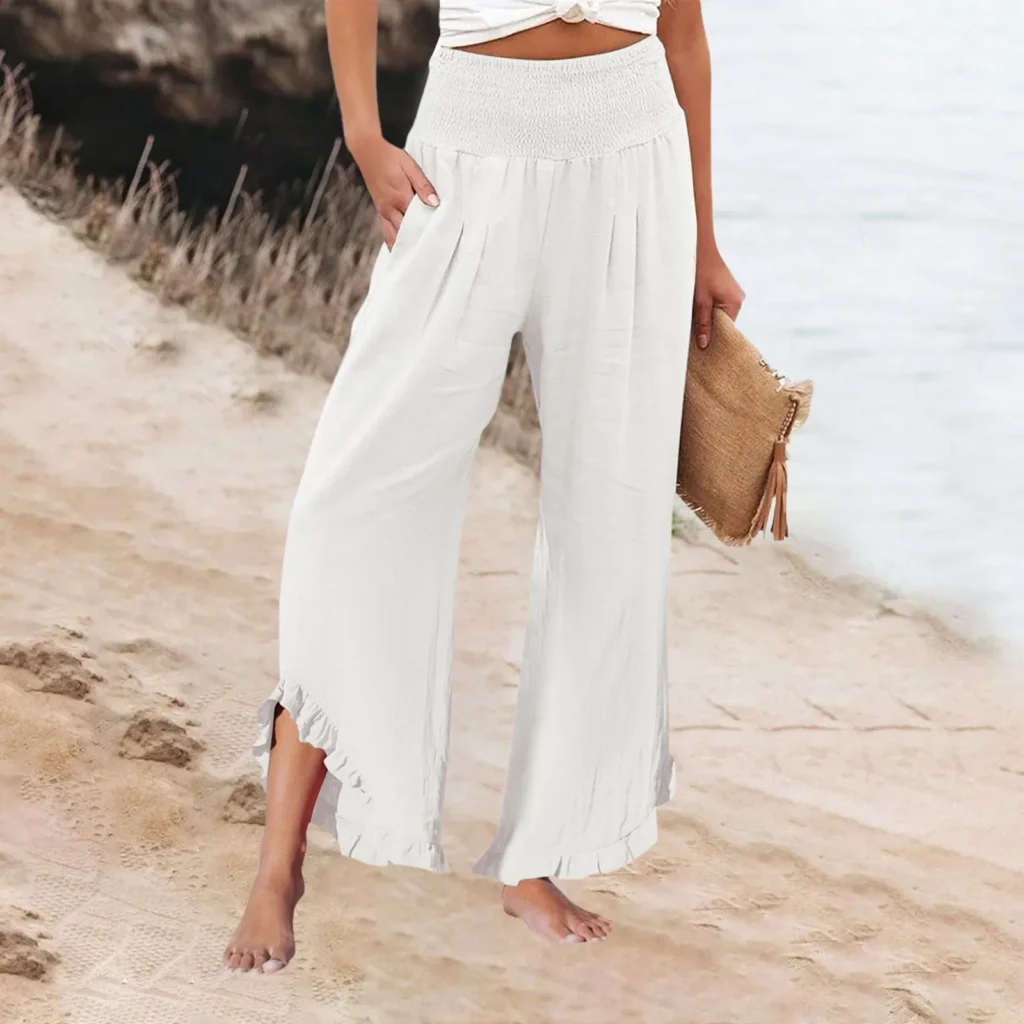
Fabric performance after washing is where the difference between linen and bamboo becomes immediately noticeable, especially in daily use and long-term maintenance.
Linen
Linen is well-known for its tendency to wrinkle, and this is not a flaw but a natural characteristic of the fiber. The structure of flax fibers lacks elasticity, which causes creasing after movement or washing. As a result:
- Wrinkles form easily, especially after sitting or folding
- Requires ironing or steaming for a polished look
- Often embraced in casual settings for its relaxed, lived-in aesthetic
Bamboo
Bamboo fabric offers a more convenient experience when it comes to maintenance. Its smoother fiber structure helps resist creasing, making it more practical for modern lifestyles:
- Naturally more wrinkle-resistant
- Maintains a cleaner appearance with minimal effort
- Ideal for travel or busy routines
Washing Differences
- Linen: Best washed in cold water and air-dried to preserve fiber strength
- Bamboo: Requires a gentle cycle and low heat to prevent fiber damage
Verdict
- Easier care: Bamboo
- Higher maintenance but more natural aging: Linen
For those prioritizing convenience, bamboo is the clear winner, while linen suits those who accept (or appreciate) its natural texture.
Sustainability: Is Bamboo or Linen More Eco-Friendly?
Sustainability has become a core factor in fabric selection, but not all “natural” materials deliver the same environmental impact in practice.
Linen Sustainability
Linen is widely regarded as one of the most sustainable fabrics available today. Its advantages come from both the raw material and the production process:
- Derived from flax, which requires minimal water
- Grows with little to no need for pesticides
- Processed with fewer chemicals compared to most textiles
- Fully biodegradable and environmentally friendly
Bamboo Sustainability
Bamboo, as a plant, is highly sustainable. It grows بسرعة, regenerates quickly, and requires fewer agricultural inputs. However, the issue lies in how it is transformed into fabric:
- Raw bamboo is eco-friendly and renewable
- Most bamboo fabrics (viscose/rayon) involve chemical processing
- Environmental impact varies depending on manufacturing standards
While bamboo begins as a sustainable resource, the processing stage reduces its overall eco advantage. Linen, with its low-impact lifecycle, remains the more consistently sustainable option. For those focused on eco-friendly clothing, linen is generally the more reliable choice.
Price & Value Comparison
Cost is not just about the upfront price—it’s about how the fabric performs over time and how often it needs to be replaced.
Linen Pants
- Typically positioned in the mid-to-premium price range
- Higher upfront cost reflects durability and longevity
- Maintains structure and usability over years
Bamboo Pants
- More accessible in terms of pricing
- Ideal for budget-conscious buyers
- May require replacement sooner due to softer fibers
Verdict
- Best long-term investment: Linen
- Best short-term value and comfort: Bamboo
From a value perspective, linen offers better returns over time, while bamboo delivers immediate comfort at a lower entry cost.
Style & Best Use Cases
Choosing between linen and bamboo also depends on how and where the pants will be worn, as each fabric aligns with different lifestyle needs.
When to Choose Linen Pants?
Linen works best in situations where breathability and a relaxed aesthetic are priorities:
- Beach vacations and resort wear
- Summer outdoor events
- Minimalist wardrobes focused on natural fabrics
- Warm climates requiring airflow and comfort
When to Choose Bamboo Pants?
Bamboo is more versatile for everyday environments where comfort and ease of wear are key:
- Daily wear and casual outfits
- Travel, especially long transit periods
- Office-casual settings
- Situations involving prolonged sitting
When comparing linen vs bamboo pants for travel, bamboo is easier to pack and maintain, while linen performs better in high heat conditions.
Pros and Cons Summary
A clear, experience-based breakdown helps highlight not just the surface-level differences, but how each fabric performs over time in real-life use.
Linen Pants Pros & Cons
Pros
- Exceptional breathability, especially in hot, dry climates where airflow is critical
- Strong fiber structure that resists wear and improves with age
- One of the most sustainable fabrics, with minimal environmental impact
Cons
- Wrinkles easily due to low elasticity, requiring regular steaming or acceptance of a relaxed look
- Less soft initially, which may not appeal to comfort-first users
Bamboo Pants Pros & Cons
Pros
- Ultra-soft texture that provides immediate comfort from first wear
- Better wrinkle resistance, making it more practical for daily use
- Easy to maintain, especially for travel or busy lifestyles
Cons
- Softer fibers tend to wear out faster, especially with frequent washing
- Sustainability varies depending on how the fabric is processed
Overall, linen stands out as a performance-driven fabric with long-term value, while bamboo is optimized for comfort and convenience in everyday situations.
Linen vs Bamboo Fabric Pants – Which One Should You Choose?
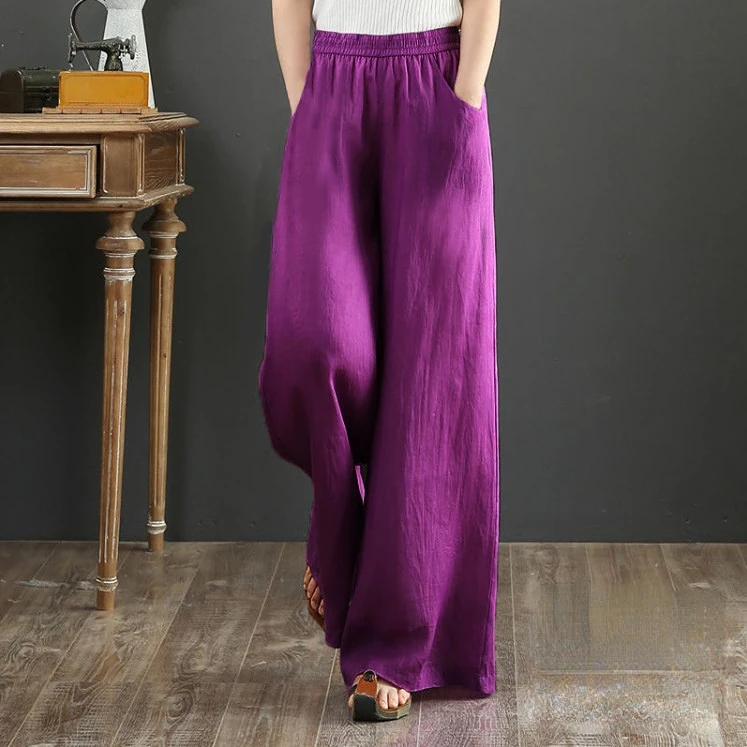
Choosing the right fabric is less about which is “better” and more about which aligns with your specific needs and environment.
Choose Linen Pants If You Want:
- Maximum breathability in consistently hot or outdoor conditions
- A durable, long-lasting wardrobe investment
- A fabric with proven sustainability and low environmental impact
Choose Bamboo Pants If You Want:
- Immediate softness and comfort for all-day wear
- Low-maintenance clothing that resists wrinkles
- Versatility for travel, office-casual, or indoor settings
In practice, linen is better suited for heat performance and longevity, while bamboo fits a comfort-first, low-effort lifestyle.
FAQ about Linen Vs Bamboo Fabric Pants
Addressing common concerns helps clarify the decision-making process from a practical perspective.
Are bamboo pants better than linen pants?
Not necessarily. Bamboo performs better in softness and ease of wear, while linen excels in breathability, durability, and long-term value.
Which fabric is cooler: linen or bamboo?
Linen is cooler due to its superior airflow and ability to release heat quickly, especially in high temperatures.
Do bamboo pants wrinkle easily?
No. Bamboo fabric naturally resists wrinkles, making it easier to maintain compared to linen.
Is bamboo fabric more sustainable than linen?
In most cases, no. Linen is generally more sustainable because it requires less chemical processing during production.
Are linen pants good for humid weather?
Yes, linen still performs well, but in very humid conditions, bamboo may feel more comfortable due to its moisture-wicking properties.
Conclusion
Choosing between linen vs bamboo fabric pants ultimately comes down to your personal priorities and lifestyle. Linen is the better choice if you value maximum breathability, long-term durability, and eco-friendly materials, especially in hot climates. On the other hand, bamboo fabric stands out for its ultra-soft feel, all-day comfort, and easy maintenance, making it ideal for everyday wear. At StrideLinen, we believe the best wardrobe is one that aligns with how you live—so whether you prefer the natural strength of linen or the smooth comfort of bamboo, the right fabric is simply the one that meets your climate, comfort, and daily needs.