At StrideLinen, we often hear one simple yet surprisingly complex question from readers: Is there really a difference between linen trousers and linen pants? As linen continues to dominate summer wardrobes, this comparison has become more relevant than ever for anyone looking to dress comfortably without sacrificing style.
If you’ve ever browsed summer clothing collections, searched for breathable workwear, or shopped for lightweight travel bottoms, you’ve likely seen both terms used—sometimes interchangeably, sometimes to describe entirely different styles. This growing overlap has led to confusion, especially as linen clothing gains popularity across global fashion markets.
The discussion around linen trousers vs linen pants goes beyond simple wording. It involves regional language differences, levels of formality, tailoring details, styling approaches, and lifestyle needs. In this in-depth guide, StrideLinen breaks down everything you need to know—from fabric basics to styling and buying tips—so you can confidently decide whether the difference is meaningful or simply a matter of terminology.
Linen Fabric Basics: What Makes Linen Unique?
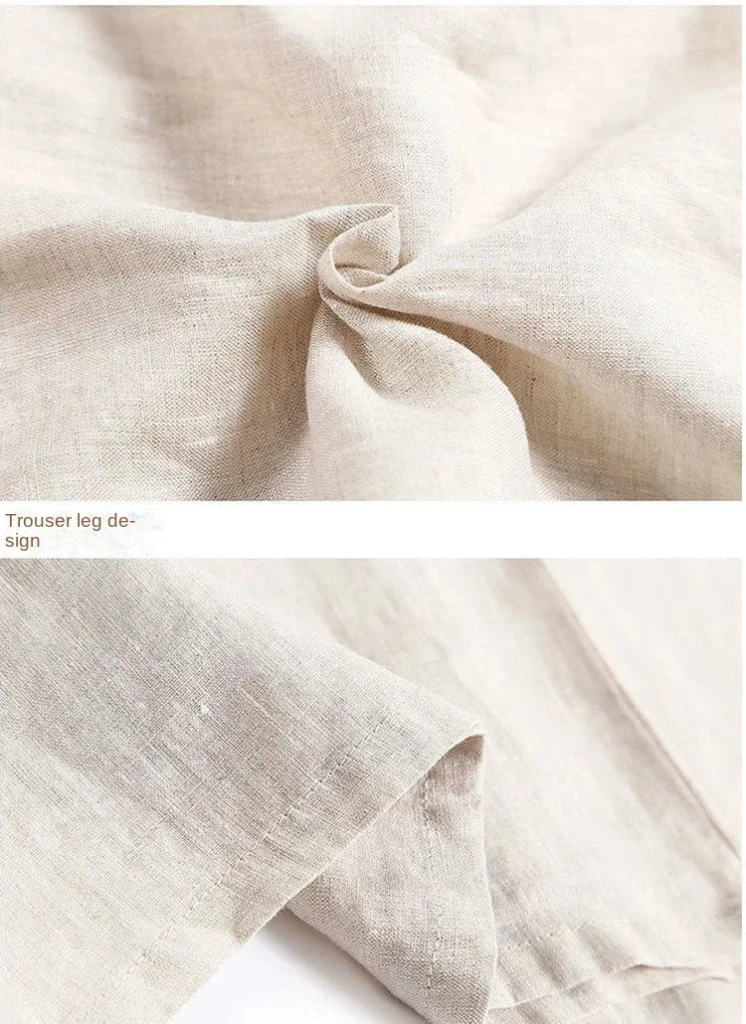
Before comparing linen trousers and linen pants, it is essential to understand the fabric itself. Linen is not just a seasonal trend—it is a performance-driven natural material whose characteristics directly influence fit, structure, and styling. These qualities are what make linen suitable for both tailored and relaxed designs.
What Is Linen Fabric?
Linen is a natural textile made from fibers of the flax plant, valued for its exceptional breathability and lightweight construction. Unlike synthetic materials that trap heat or heavier natural fabrics that feel restrictive in summer, linen allows air to circulate freely while absorbing moisture from the skin. This functional advantage explains why linen has remained a staple in warm-weather clothing for centuries.
- High airflow and natural ventilation, reducing heat retention
- Quick-drying and moisture-wicking properties that enhance comfort
- A lightweight feel with a slightly textured, organic finish
- Long-term durability that improves with repeated wear and washing
- Sustainable and eco-friendly production with minimal environmental impact
Because linen allows heat to escape and promotes continuous airflow, it keeps the body cool even in hot and humid conditions. This is why linen trousers and linen pants are consistently favored for summer wear, travel, and climates where comfort is a priority without compromising appearance.
Linen in Modern Fashion
Traditionally linked to beachwear and resort outfits, linen has undergone a significant evolution in modern fashion. Today, it is widely used in tailored office trousers, minimalist everyday pants, and structured summer workwear, proving its versatility beyond casual settings. Contemporary fashion embraces linen for:
- Smart casual and business-casual summer dressing
- Clean, minimalist silhouettes suitable for daily wear
- Travel-friendly garments that balance comfort and refinement
- Sustainable fashion collections focused on natural materials
This shift in how linen is designed and worn is precisely why the distinction between linen trousers vs linen pants matters. While the fabric may be the same, its application—through cut, construction, and styling—can signal very different levels of formality and intent
Linen’s natural properties make it adaptable across styles, but how it is tailored defines its role. Understanding the fabric is the foundation for recognizing why linen trousers often appear more structured, while linen pants lean toward relaxed comfort.
Linen Trousers vs Linen Pants: Are They Actually Different?
At first glance, the difference between linen trousers and linen pants appears to be purely linguistic. However, in fashion communication and retail positioning, terminology often carries subtle but meaningful implications that go beyond dictionary definitions.
Trousers vs Pants – Terminology Explained
The root of this comparison begins with regional language usage. The terms trousers and pants are not universally interchangeable, and their meaning depends largely on geographic and cultural context.
- In British English, trousers is the standard and formal term used to describe lower-body garments worn from the waist to the ankles. The word carries a neutral-to-polished connotation and is commonly used in professional, retail, and tailoring contexts.
- In American English, pants serves the same functional purpose and is the most widely accepted everyday term. It is used across both casual and formal settings, making it broader and more flexible in tone.
This regional language difference alone accounts for much of the confusion surrounding linen trousers vs linen pants, especially in global fashion markets where brands communicate to international audiences.
Do Linen Trousers and Linen Pants Mean the Same Thing?
From a technical standpoint, linen trousers and linen pants can refer to the same category of garment. However, in practical usage—particularly within fashion retail, styling guides, and product descriptions—the terms often suggest different design intentions.
- Linen trousers typically imply a more structured approach, featuring tailored cuts, defined waistbands, and cleaner silhouettes. They are frequently associated with smart casual or semi-formal dressing, making them suitable for office wear and refined summer occasions.
- Linen pants, by contrast, tend to signal a more relaxed interpretation of the same fabric. The term is commonly used for designs with looser fits, elastic or drawstring waists, and minimal tailoring, positioning them as everyday, travel-friendly, or leisure-focused pieces.
These distinctions become more apparent when examining how the garment is cut, constructed, and styled, rather than relying solely on terminology While language sets the foundation, context defines the meaning. Linen trousers and linen pants may share the same fabric, but their naming often reflects differences in structure, formality, and intended use rather than mere wording alone.
Key Differences: Linen Trousers vs Linen Pants
Although both garments share the same breathable linen fabric, their differences become clear when examining formality, fit, and construction. These factors determine how each style functions within a wardrobe and why the terms are not always interchangeable in real-world use.
Style & Formality
Formality is the most immediately recognizable distinction between linen trousers and linen pants.
Linen trousers are typically designed with a more polished purpose in mind. They are commonly worn for:
- Office and business-casual environments
- Smart casual gatherings
- Semi-formal summer occasions
Their design emphasizes structure, featuring clean lines, balanced proportions, and refined tailoring that aligns with professional or elevated settings.
Linen pants, in contrast, are positioned toward relaxed wear. They are most often associated with:
- Casual daily outfits
- Travel, resort, and vacation wear
- Effortless summer styling
Rather than prioritizing sharpness, linen pants focus on comfort, fluid movement, and a laid-back aesthetic that feels natural in informal environments.
Fit & Tailoring
Fit is a defining factor in how these garments are categorized and perceived.
Linen trousers usually feature:
- Tailored or semi-tailored fits that hold their shape
- Defined waistbands with belt loops
- Straight-leg or subtly tapered cuts
- Design elements such as pleats or front creases
These details contribute to a cleaner silhouette and a more intentional appearance.
Linen pants, on the other hand, often include:
- Relaxed or loose fits that prioritize ease
- Elastic waistbands or drawstring closures
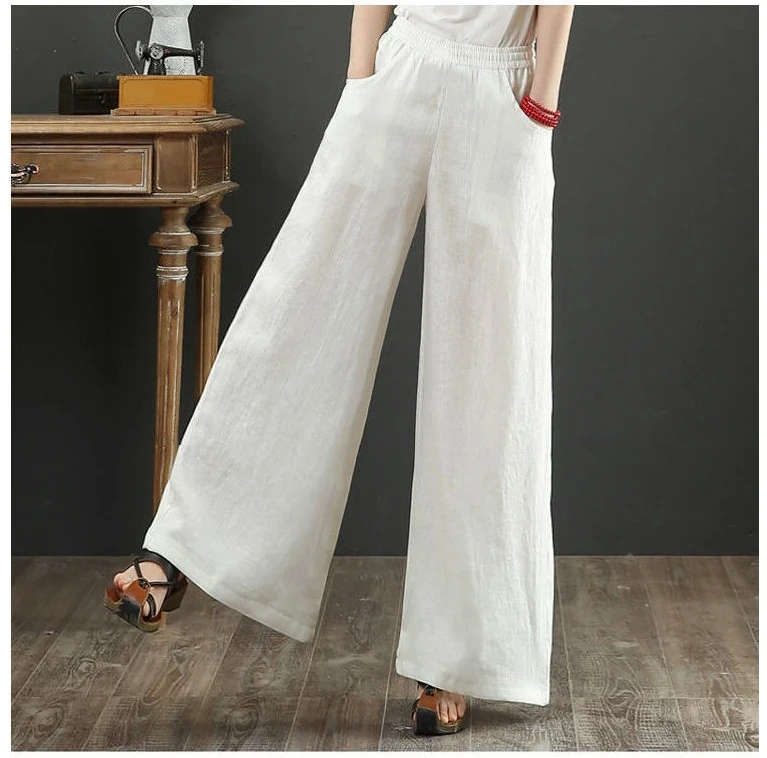
- Wide-leg or flowy silhouettes
- Minimal shaping or internal structure
As a result, linen pants feel softer and less restrictive, making them suitable for long wear and movement-heavy days.
Design Details
Beyond fit, small construction details further differentiate the two styles.
Typical linen trouser features include:
- Button, hook, or zip closures
- Belt loops for styling versatility
- Crisp seams and defined lines
- Structured waistbands that maintain form
Typical linen pant features include:
- Pull-on designs without closures
- Soft or elasticized waistbands
- Minimal stitching and finishing
- Casual, unstructured construction
These design choices directly influence not only how the garment looks, but also where it fits within different dress codes and occasions
The difference between linen trousers and linen pants lies in intent. While both use the same fabric, trousers emphasize structure and refinement, whereas pants prioritize comfort and ease—making each suitable for distinctly different settings despite their shared material.
Linen Trousers vs Linen Pants for Different Occasions
While linen as a fabric adapts well to many settings, the distinction between linen trousers and linen pants becomes most evident when viewed through the lens of occasion. Dress codes, social context, and styling expectations all influence which option feels appropriate.
Office & Workwear
In professional environments, linen trousers tend to be the more reliable choice. Linen trousers designed for work typically offer:
- A polished silhouette suitable for business casual and smart casual offices
- Easy pairing with blazers, button-down shirts, and structured footwear such as loafers or oxfords
- The ability to remain breathable and comfortable without appearing overly relaxed
Their tailored construction helps maintain a professional image while still addressing the practical need for airflow in warmer months.
Linen pants, by contrast, can work in creative industries or relaxed office settings, especially when styled with refined tops and neutral colors. However, in traditional workplaces, their softer structure and casual detailing often make them feel underdressed unless carefully balanced.
Casual, Travel & Vacation Wear
For informal settings, linen pants are often the more practical and comfortable option. Linen pants are particularly well suited for:
- Travel and long days that require ease of movement
- Beach, resort, and coastal environments
- Everyday summer activities and errands
- Relaxed social outings in warm weather
Their lightweight fabric, flexible waist construction, and loose silhouettes reduce restriction and enhance comfort, making them ideal for hot climates and extended wear.
Events & Social Settings
For social occasions, the choice depends largely on the tone and timing of the event.
- Linen trousers are better suited for weddings, dinners, and evening gatherings where a refined or semi-formal appearance is expected.
- Linen pants work well for daytime events, outdoor celebrations, and informal meetups where comfort and ease take priority over structure.
Understanding the formality of the setting ensures the garment complements the occasion rather than feeling mismatched.
The suitability of linen trousers or linen pants is defined less by the fabric and more by context. Linen trousers align with structured, professional, or formal environments, while linen pants excel in casual, travel, and relaxed social settings.
Men’s vs Women’s Linen Trousers and Linen Pants
Although linen trousers and linen pants follow similar principles across wardrobes, their interpretation differs noticeably between men’s and women’s fashion. Design priorities, fit variations, and styling expectations all shape how these garments are positioned for each audience.
Men’s Linen Trousers vs Linen Pants
In men’s wardrobes, the distinction between linen trousers and linen pants is often closely tied to occasion and dress code.
Men’s linen trousers are typically designed with a more refined structure, making them suitable for:
- Summer office wear and business-casual environments
- Semi-formal events and social gatherings
- Outfits paired with button-down shirts, lightweight blazers, and dress shoes
Their construction usually favors clean lines and controlled silhouettes, reinforcing a polished appearance even in warm weather.
Men’s linen pants, by contrast, lean toward ease and versatility. They are commonly styled with:
- T-shirts, polos, or casual shirts
- Sneakers, sandals, or loafers
- Relaxed everyday or travel-focused outfits
Fit options across both styles include straight-leg, tapered, and relaxed cuts, allowing men to choose based on comfort, body shape, and aesthetic preference.
Women’s Linen Trousers vs Linen Pants
Women’s linen styles offer a broader range of design interpretations, making the distinction between trousers and pants more pronounced.
Women’s linen trousers often feature:
- High-waisted or structured waistlines
- Pleats and tailored finishes
- Silhouettes suited for professional or polished settings
These designs align well with office wear, smart casual outfits, and occasions that call for a refined look.
Women’s linen pants emphasize fluidity and comfort, commonly including:
- Wide-leg or loose-fitting silhouettes
- Elastic or drawstring waistbands
- Soft, flowy constructions ideal for casual or minimalist styling
This variety allows for greater freedom in outfit coordination while maintaining the breathable benefits of linen.
While both men’s and women’s linen garments share the same fabric advantages, their design and styling differ by audience. Linen trousers tend to support structured, polished looks, whereas linen pants prioritize comfort and flexibility, reflecting the functional and aesthetic needs of each wardrobe.
How to Style Linen Trousers vs Linen Pants?
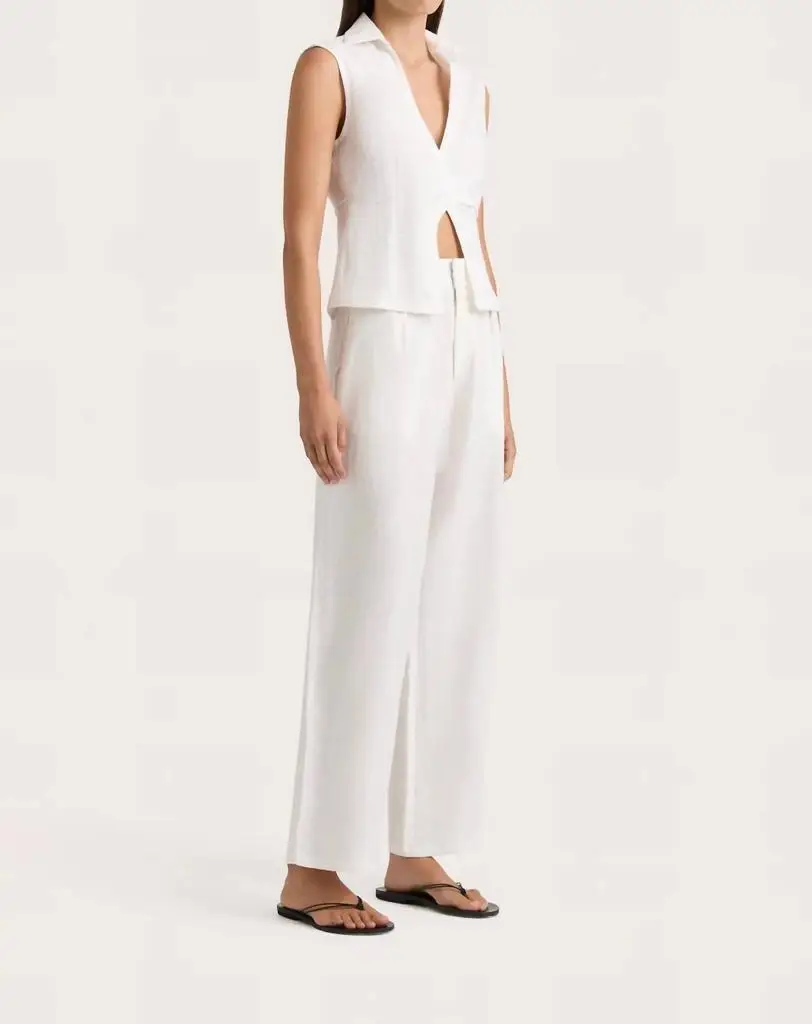
Styling plays a key role in reinforcing the difference between linen trousers and linen pants. While both share the same breathable fabric, how they are paired determines whether the final look appears refined or relaxed.
How to Style Linen Trousers?
Linen trousers benefit from deliberate styling choices that enhance their structured nature. Effective ways to style linen trousers include:
- Pairing with fitted or lightly tailored blazers to maintain clean lines
- Wearing button-down shirts fully tucked or half-tucked for a balanced silhouette
- Choosing loafers, leather sandals, or low heels to elevate the overall outfit
- Sticking to neutral or muted color palettes that reinforce a polished aesthetic
These combinations work particularly well for smart casual environments, office settings, and events where comfort is required without sacrificing structure.
How to Style Linen Pants?
Linen pants are best styled with an emphasis on ease and natural flow. Popular styling approaches include:
- Combining with t-shirts, tank tops, or relaxed-fit tops
- Layering with lightweight knitwear or loose blouses
- Selecting casual footwear such as sneakers, sandals, or espadrilles
- Adding simple, layered accessories to enhance a laid-back look
This styling direction highlights the effortless appeal of linen pants and supports their role in casual, travel, and everyday summer outfits.
The styling difference lies in intention. Linen trousers respond well to structured pairings that elevate their appearance, while linen pants achieve their best effect when styled simply, allowing comfort and movement to take center stage.
Linen Trousers or Linen Pants: Which One Should You Choose?
Choosing between linen trousers and linen pants ultimately depends on lifestyle, daily routines, and how often different dress codes come into play. While both offer the same breathable fabric benefits, their value lies in how well they align with real-world needs.
Choose Linen Trousers If…
Linen trousers are a practical choice when structure and versatility are required. They work best if:
- Office-appropriate summer clothing is needed without relying on heavy fabrics
- Structured silhouettes are preferred for a more polished appearance
- Semi-formal events or smart casual settings are part of regular routines
- A single garment needs to transition easily between professional and social environments
Their tailored design allows linen trousers to function as a refined wardrobe staple rather than a purely seasonal piece.
Choose Linen Pants If…
Linen pants are better suited for comfort-driven wardrobes and relaxed lifestyles. They are ideal when:
- Comfort and ease of movement are top priorities
- Travel is frequent or the climate is consistently warm
- Casual, laid-back styling is favored over structure
- Simple, low-effort everyday outfits are preferred
Their relaxed construction makes them especially practical for long wear and informal settings.
In many cases, owning both is the most effective solution. Linen trousers and linen pants serve different roles, and together they provide flexibility across work, leisure, travel, and social occasions without sacrificing comfort or style. The choice is less about fabric and more about function. Linen trousers support structure and adaptability, while linen pants prioritize comfort and ease—making each valuable in different parts of a well-balanced wardrobe.
Buying Tips: What to Look for in Quality Linen Bottoms?
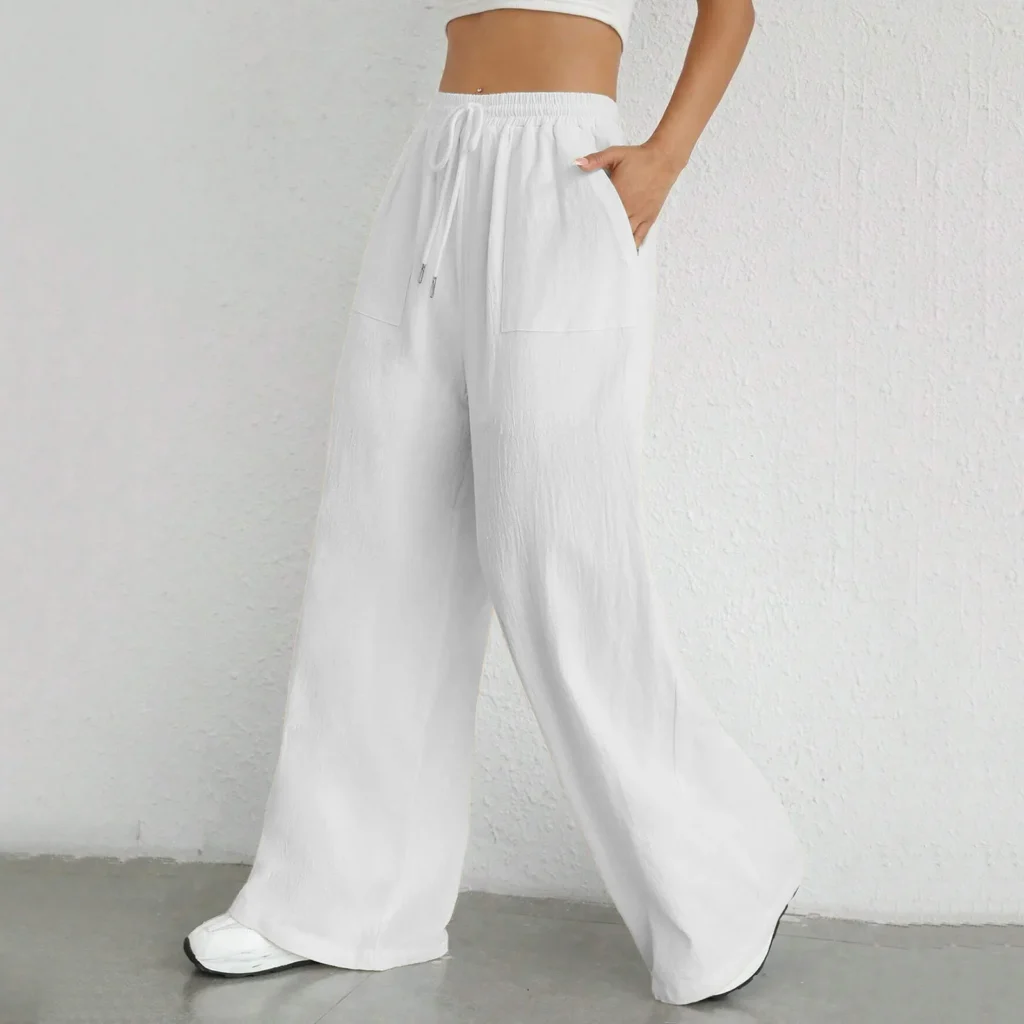
Not all linen bottoms are created equal. Fabric quality, construction, and color choice directly affect comfort, durability, and how versatile the garment will be over time. Paying attention to these elements helps ensure a purchase that performs well beyond a single season.
Fabric Quality & Weave
Fabric quality is the foundation of well-made linen trousers or linen pants. When evaluating materials:
- Prioritize high-quality linen or thoughtfully designed linen blends that balance breathability and durability
- Avoid overly thin fabrics that wrinkle excessively and lose shape quickly
- Look for a breathable weave with a slightly textured surface, which indicates natural flax fibers rather than overly processed material
Well-constructed linen should feel light but substantial, offering airflow without appearing fragile.
Fit & Construction
Fit and construction determine how the garment looks when worn and how long it lasts.
- Ensure the waistband sits comfortably without pulling or gaping
- Check stitching, seams, and finishing for consistency and reinforcement
- Choose tailoring that complements body shape, whether structured for linen trousers or relaxed for linen pants
A well-fitted linen bottom enhances both comfort and overall appearance, regardless of style.
Color & Versatility
Color selection plays a strategic role in wardrobe versatility.
- Neutral tones such as beige, white, navy, and soft gray offer the greatest styling flexibility
- Darker shades tend to appear more polished and work better in professional or evening settings
- Lighter colors emphasize summer freshness and pair easily with seasonal outfits
Selecting the right color extends the garment’s usability across multiple occasions
Quality linen bottoms are defined by balanced fabric weight, thoughtful construction, and versatile color choices. Focusing on these factors ensures a piece that remains comfortable, functional, and relevant well beyond one summer season.
FAQs About Linen Trousers vs Linen Pants
These frequently asked questions address the most common points of confusion surrounding linen trousers and linen pants, focusing on formality, practicality, and real-world use rather than terminology alone.
Are linen trousers more formal than linen pants?
In most cases, yes. Linen trousers are typically more tailored, featuring structured waistbands, cleaner lines, and refined detailing. These elements make them better suited for office settings, smart casual environments, and semi-formal occasions compared to linen pants.
Can linen pants be worn to work?
Linen pants can be worn to work in creative, casual, or relaxed office environments. Styling plays a critical role—pairing them with polished tops, neutral colors, and refined footwear can elevate their appearance. However, they may still feel too informal for traditional or conservative workplaces.
Is there a real difference, or is it just wording?
Both language and design contribute to the difference. While the terms can be interchangeable from a linguistic perspective, in fashion contexts they often signal distinct levels of structure, fit, and intended use. Context ultimately determines how each term is applied.
Which is better for summer?
Neither option is universally better. Both linen trousers and linen pants offer excellent breathability and comfort in warm weather. The better choice depends on the occasion, desired level of formality, and personal styling preferences.
Conclusion
At StrideLinen, we believe understanding the difference between linen trousers vs linen pants empowers you to dress with confidence rather than confusion. While the terms may overlap linguistically, they often represent distinct approaches to style, structure, and occasion.
Linen trousers bring polish and professionalism, making them ideal for work and formal settings. Linen pants prioritize comfort and ease, perfectly suited for casual days, travel, and warm-weather living. Neither is inherently better—each simply serves a different purpose. By recognizing these nuances and choosing thoughtfully, you can build a linen wardrobe that feels intentional, versatile, and effortlessly stylish. And in the end, that clarity is what truly defines great summer dressing.